


Ways to Positively Contribute to Conservation and Wildlife Protection when Visiting a National Park
- lfeinstein
- May 12, 2022
- 3 min read
National parks in the United States are seeing more and more visitors every year. (“Visitation Numbers (U.S. National Park Service).”). National parks do not exist solely for visitors however, and most parks have two main goals: to make nature accessible to the public, and to conserve the natural world and protect wildlife. These two goals are often at odds with each other however. The more access visitors have to the park, the harder it becomes to conserve the natural world and keep wildlife wild. However, there are ways visitors can positively impact conservation efforts and actively protect wildlife.
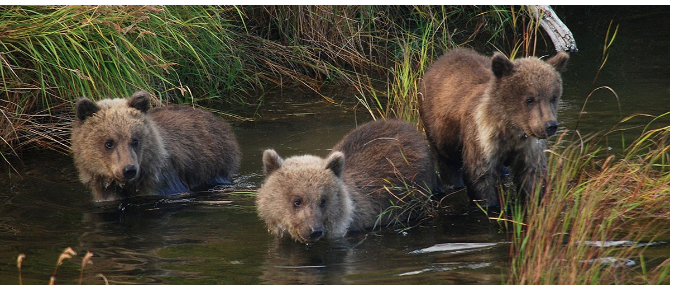
Visitors can have an enormous positive impact on national parks by promoting safe wildlife viewing habits. A primary motivation behind almost all national park visitors is to get a peek at some of the most interesting animals in the park like bears, moose, and other large mammals (Rice 35). The viewing of wildlife can be fatal when done incorrectly, however. When animals are not given enough distance, especially when their young are nearby, they can often feel provoked and attacked. This is not only true for animals like bears, but can be even more common with large prey like moose and elk.
Several steps can be taken to ensure safety for both visitors and wildlife. First of all, visitors should always keep 100 yards/meters between themselves and the wildlife they are viewing. If visitors find themselves too close, they should back up slowly from the animal without turning around. Most importantly, keep food stored in scent proof containers. If visitors are staying the night in an outdoors space, food should be kept out of reach of animals (Wilkenson). When wildlife in national parks is fed they become accustomed to human interaction. Especially for species like bears this poses a danger to both visitors and the bear, and the animal is forced to be put down. “A fed bear is a dead bear,” according to an article titled “For tourist and grizzly bear, a team of referees” by Todd Wilkenson. When viewing wildlife, visitors should not only make sure they follow these guidelines, but also promote safe viewing behavior to others around them. It will keep national parks a safe place for humans and animals alike.

Visitors can have long term positive impacts on national parks as well. For those that are dedicated to experiencing the natural world, most parks have their own programs that benefit the park and actively contribute to conservation efforts. The Grand Teton National Park Foundation has youth engagement programs as well as workshops, and volunteer opportunities (“Grand Teton National Park Foundation: Jackson, WY.” ). Most national parks provide similar ways of getting involved. Engaging with national parks in these ways makes a lasting impact while still letting visitors enjoy nature.
Works Cited
“Grand Teton National Park Foundation: Jackson, WY.” Grand Teton National Park Foundation | Jackson, WY, 17 Mar. 2022, https://www.gtnpf.org/.
Rice, William L., et al. “Grand Expectations: Understanding Visitor Motivations and Outcome Interference in Grand Teton National Park, Wyoming.” Journal of Park & Recreation Administration, vol. 37, no. 2, Summer 2019, pp. 26–44. Academic Search Complete, https://doi.org/10.18666/JPRA-2019-9283.
“Visitation Numbers (U.S. National Park Service).” National Parks Service, U.S. Department of the Interior, https://www.nps.gov/aboutus/visitation-numbers.htm.
Wilkinson, Todd. “For Tourist and Grizzly Bear, a Team of Referees.” Christian Science Monitor, 26 Aug. 2011, p. N.PAG. Academic Search Complete, https://search.ebscohost.com/login.aspx?direct=true&db=a9h&AN=64933293&site=ehost-live.
Cited images:
“Feeding Bears.” Kentucky Department of Fish & Wildlife Resources. 2022. https://fw.ky.gov/Education/Pages/Feeding-Bears.aspx
“Wildlife.” National Park Service. 3 Oct. 2016. https://www.nps.gov/katm/learn/nature/wildlife.htm


Comments